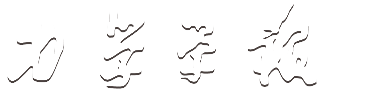
基于傅里叶特征物理信息神经网络的P-SV弹性波场模拟方法
P-SV ELASTIC WAVEFIELD SIMULATION METHOD BASED ON FOURIER FEATURE PHYSICS-INFORMED NEURAL NETWORKS
-
摘要: 地震波场数值模拟是固体地球物理数值分析的重要分支. 物理信息神经网络提供了一种无网格的求解框架, 但也面临着高频、多分量耦合弹性波场求解时, 受谱偏差与软约束初始条件导致的损失函数梯度不平衡的问题. 本文以二维各向同性P-SV弹性波方程为控制方程, 构建了基于傅里叶特征嵌入的物理信息神经网络(FF-PINN)弹性波正演方法, 该方法在网络输入端引入高斯型傅里叶特征映射, 将时空坐标投影至高维特征空间, 以缓解多层感知机的谱偏差, 显著提升了网络对振荡波场的表达能力, 其次, 采用并行双子网络结构分别代理水平与垂向位移分量, 实现P波与SV波耦合传播的联合建模, 使用近似距离函数对网络输出实施硬约束, 在结构层面严格满足零位移与零速度初始条件. 采用均质模型, 开展了傅里叶尺度参数, 激活函数及软/硬约束初始条件的系统消融实验, 并选取三层曲线界面模型, 含弱化带的斜向断层模型与混合高斯随机非均质模型进行综合检验. 结果表明, FF-PINN能够清晰刻画P-SV波在复杂界面处的波行为, 验证了所提方法求解二维弹性波正演问题的有效性及其对不同复杂介质和震源条件的适用性.Abstract: Numerical seismic wavefield simulation is an important branch of computational solid-Earth geophysics. Physics-informed neural networks (PINNs) provide a mesh-free framework for solving partial differential equations. However, when applied to strongly oscillatory, multicomponent coupled elastic wavefields, PINNs still face difficulties associated with the spectral bias of neural networks and the loss-gradient imbalance caused by softly imposed initial conditions. Based on the two-dimensional isotropic P-SV elastic wave equations, this study develops a Fourier-feature-embedded physics-informed neural network (FF-PINN) method for elastic-wave forward modeling. A Gaussian Fourier feature mapping is introduced at the network input to project the spatiotemporal coordinates into a high-dimensional feature space. This mapping mitigates the spectral bias of multilayer perceptrons and enhances their ability to represent oscillatory wavefields. In addition, two parallel subnetworks are employed to approximate the horizontal and vertical displacement components separately, enabling the joint modeling of coupled P- and SV-wave propagation. An approximate distance function is used to transform the network outputs, ensuring that the zero-displacement and zero-velocity initial conditions are strictly satisfied by construction. Systematic ablation experiments are conducted using a homogeneous model to investigate the effects of the Fourier scale parameter, activation function, and soft and hard enforcement of the initial conditions. The method is then comprehensively evaluated using a three-layer curved-interface model, a dipping-fault model containing a weakened zone, and a mixed-Gaussian random heterogeneous model. The selected cases cover curved interfaces, localized velocity weakening, random heterogeneity, and multi-source interference. These models represent increasingly complex medium structures and source conditions and are used to examine the applicability of the method to coupled elastic-wave propagation. The results show that FF-PINN can clearly capture the propagation behavior of P-SV waves at complex interfaces and reproduce the principal spatial patterns of both horizontal and vertical displacement fields. The numerical experiments demonstrate the effectiveness of the developed method for two-dimensional elastic-wave forward modeling and its applicability to different complex media and source configurations.
 下载: